
Living Strong By The Word
Strength is available to the believer, yet, it must be developed.
A Christian inspiration digital magazine featuring faith, healing, leadership,
partnership, and Word-based encouragement for this season.

In This Month's Issue
Tap any section below to move directly through this month’s Partner Monthly issue.
Letter From The Publisher
A personal word from Pastor Derick E. Wilkes concerning this month’s emphasis.
02Leadership Corner
Practical and spiritual leadership insight for those carrying Kingdom assignment.
03Healing Corner
Word-based teaching to help believers receive and walk in divine health.
04Article of the Month
The featured message and teaching focus for this month’s issue.
05Video Message
Watch this month’s featured video teaching and continue with the playlist.
06Giving & Partnership
Partner with the assignment and help send the Word forward.
This issue is now designed for vertical reading. Scroll naturally or tap a section above.
Good Day Partners
This month, I want to encourage you with a simple thought: God has called us to live strong by His Word.
There is a difference between having strength available and actually being strong. Proverbs 24:10 says, “If thou faint in the day of adversity, thy strength is small.”
The verse does not say strength is absent. It shows us that strength can be present and still need development.
So then, the question becomes: How do we become strong?
The psalmist gives us the answer:
“Strengthen thou me according unto thy word.” — Psalm 119:28
The Word of God is not merely something we turn to when trouble comes. It is our daily nourishment. We do not wait for adversity before we begin feeding our spirit.
We live by the Word every day, because the Word strengthens us inwardly and develops faith in us.
That is why this month’s message is so important.
The Word we live by produces the faith we live by. And when the Word is being received consistently, we are not trying to manufacture strength when pressure arrives. We have been living strong by the Word all along.
Partner, I want to encourage you to keep hearing, keep believing, keep acting on what God has said, and keep developing in faith. Adversity is not the source of your strength. The Word is.
Thank you for your continued partnership, prayers, and support. Together, we are helping people hear the Word, receive the Word, and live strong by the Word.
Congregation of Churches | PartnerMonthly.org
I live by the Word because there is life being communicated through the Word.


I AM MORE THAN MY DOING
What I do is an expression of who I am, but what I do is not the definition of who I am.
Sometimes we answer activity-based questions with identity responses.
For example, people may ask, “What do you do?” and we respond with an identity statement. Our response is preceded with: I AM.
It sounds like a simple question, yet sometimes a simple question opens the door to a deeper revelation.
Someone may ask, “How are you doing?” A better question might be, How are things going? Yet our response could be: “I’m enjoying life.” For me, that is a Word-based response, not necessarily a circumstantial one.
Or we might say, “I’m doing by the help of Holy Spirit. I’m doing by the grace of God.” If one asks me how I’m doing, then I’m doing with His help.
But then comes the marketplace question:
Now that is an interesting question, because if we are not careful, we can answer a question about activity with a statement about identity.
We may say, “I am a pastor. I am an evangelist. I am a businessman. I am a teacher. I am a web developer. I am a consultant.” There is nothing wrong with those descriptions. They communicate useful information. Pastor and evangelist describe callings. Teacher describes a function. Businessman, developer, and consultant tell people something about our work.
But none of them is big enough to contain me.
WHAT I DO IS NOT ALL THAT I AM.
This becomes particularly important for leaders, because we can become so closely identified with our assignments that we eventually allow the assignment to define us.
“I pastor.” “I preach.” “I build.” “I run the company.” “I manage the department.” “I own the business.” But what happens when the assignment changes? What happens when one season ends and another begins?
If I am what I do, then when I stop doing it, I have an identity crisis. But if I understand that what I do flows from who I am, I can move from assignment to assignment without losing myself.
These things can work together, but they are not necessarily the same thing.
My activity answers, “What am I doing?” My assignment answers, “What has been placed in my hands?” My calling speaks to the direction and grace upon my life. But identity goes deeper:
I cannot allow a temporary assignment to become the permanent definition of me.
THERE WAS A TIME WHEN JESUS ASKED A QUESTION OF HIS DISCIPLES
Look at the question. Jesus did not ask, “What do I do?” They could have listed His activities all day: You preach. You teach. You heal the sick. You cast out devils. You work miracles. You feed multitudes. You lead disciples.
But that was not the question.
Peter did not answer, “Thou art a carpenter,” or merely, “Thou art a prophet.” Peter said, “Thou art the Christ, the Son of the living God.” That is identity.
And Jesus said, “Flesh and blood hath not revealed it unto thee, but my Father which is in heaven.” Peter’s answer came by revelation.
There are some things observation can tell you about a person because you can watch what they do. But there are dimensions of identity that cannot be properly discerned merely by observing activity.
PEOPLE CAN SEE WHAT YOU DO WITHOUT KNOWING WHO YOU ARE
People watched Jesus and reached conclusions. Some said John the Baptist. Some said Elijah. Some said Jeremiah. Others said one of the prophets. They were trying to identify Him from what they had observed. But Peter received something beyond observation.
And there is a leadership lesson here: do not become frustrated when people know what you do, but do not fully know who you are. They may know your assignment, your title, your occupation, your position, or your business. But knowing what someone does is not necessarily the same as knowing who that person is.
EVEN A CORRECT TITLE CAN BE TOO SMALL
If someone asks, “What do you do?” I could say, “I’m an evangelist,” or “I’m a pastor.” Those labels describe aspects of calling and assignment, but they do not contain the entirety of my identity.
I am a believing Christian. I am a Kingdom citizen. I am in Christ.
I am more than my doing. That does not diminish the calling. It actually puts the calling in its proper place. I do not need to make what I do smaller. I simply refuse to make who I am that small.
SO THEN, HOW DO WE ANSWER IN THE MARKETPLACE?
If somebody at a marketplace event asks, “What do you do?” they usually are not asking for a theological discussion about identity. They are trying to understand your work. We can answer the question without allowing the question to redefine us.
“I help...”
Now we are talking about contribution rather than confinement. “I help people...” “I help businesses...” “I help ministries...” “I help organizations...”
Another useful phrase is: “My work involves...” Or: “One of the things I do is...” That statement leaves room for another assignment, another expression, another season. I have not turned my present assignment into my permanent identity.
If they ask what I do, I can tell them what I do. If they ask what I am working on, I can tell them my assignment. If they ask about my calling, I can discuss my calling. And if we get down to who I am, now we are having another conversation.
WE LEAD FROM BEING, NOT JUST DOING
Leadership can become consumed with activity: meetings, projects, budgets, schedules, messages, employees, members, timelines, challenges, solutions. We can become professional doers. But effective doing should flow from healthy being.
Notice the order even in His language: The Son — identity. Then: do — activity. He did not become the Son because He performed correctly. His doing proceeded from who He was.
My doing can proceed from a settled place of identity. If my identity comes from what I accomplish, then accomplishment becomes something I need in order to feel like myself. Now I have to keep producing, proving, achieving, being recognized, and performing.
That is exhausting. But Kingdom identity gives leadership another posture. I can work hard without asking my work to tell me who I am. I can build without asking what I am building to validate me. I can lead without asking the people I lead to establish my identity. I can succeed without allowing success to name me.
Why? Because:
I AM MORE THAN MY DOING
So tomorrow somebody may ask, “What do you do?” And I will answer them. I will tell them about my work, what I help people accomplish, what I am building, and what I am presently involved in. But inwardly, something is settled.
but what I do is not the definition of who I am.
My assignment is in my hands. My identity is deeper than my assignment. I do not have to squeeze the entirety of myself into a job title, and I do not have to fear when God brings me into something new.
Perhaps that is why the question Jesus asked is still so powerful: “Whom say ye that I am?” Not merely, “What have you seen Me do?” Because eventually revelation has to take us beyond activity and into identity. Once identity is settled, doing can take its proper place.
That’s All For Now!
Derick E. Wilkes
Congregation of Churches
484-800-3434
Get the Good Report Before You Go
Whose report will you believe? Faith settles God’s report before another report is allowed to determine what you believe.
There is a familiar expression among believers when facing a medical situation: “I’m believing God for a good doctor’s report.”
It sounds like faith. But think about it.
If I am believing God, why am I waiting for the doctor to give me the good report?
The objective of faith is not to go to the doctor hoping that the doctor will finally tell me something good. The objective is to get the good report before I go.
That does not mean we disrespect doctors. A doctor can provide valuable information concerning what is happening in the body. We can appreciate medical knowledge, testing, treatment, and expertise. But there is a difference between receiving information and establishing authority.
The doctor’s report can tell me what was observed.
God’s report tells me what He has provided.
And faith begins by settling which report has the final word.
THE GOOD REPORT ALREADY EXISTS
Isaiah asks:
Notice that the question is not, “Who is waiting for a report?”
There is already a report to believe.
And from the finished side of the cross, the believer does not have to wonder what God’s report concerning healing says.
That is a report.
Before the examination. Before the test. Before the scan. Before the laboratory results. Before somebody tells you whether things look better or worse.
God has already spoken.
So then, I do not need another report before I can believe the good report.
I need to believe His report first.
WHAT ARE YOU BELIEVING GOD FOR?
Sometimes we say, “I’m believing God that the doctor will give me a good report.”
But that subtly makes the doctor’s report the destination of our faith.
What happens if the doctor does not give you the report you expected? Does God’s report change?
No.
What happens if the numbers have not changed yet? Does God’s Word change?
No.
What happens if what can be seen does not yet agree with what God has said?
His report remains His report.
Look at the language of Scripture.
All things are possible to him that believes.
With God all things are possible.
With God nothing shall be impossible.
So before I allow another report to determine what I believe, I need to establish what God has already reported.
HIS REPORT IS GOOD BY DEFAULT
God does not need someone else to make His report good. His nature establishes the quality of what comes from Him.
If it comes from the Father, it is good.
Healing is good. Life is good. Wholeness is good. Freedom is good.
And Jesus demonstrated the Father’s will wherever He went. He did not make people sick and call it good. He healed those who were oppressed.
So when I open the Word, I am not trying to persuade God to produce a good report.
I am discovering the report He has already given.
BEFORE YOU GO, GET THE REPORT
Perhaps we need to change the order.
What if it becomes: God speaks. I hear. I believe. Then I go.
Now I am not walking into the doctor’s office trying to find out what I am going to believe.
I already know.
The physician may tell me what the examination reveals, and I can intelligently deal with that information. But I do not have to surrender God’s report because another report describes something different.
One report describes the condition.
The other reveals the provision.
And faith does not deny that circumstances exist.
Faith simply refuses to allow circumstances to have the final word.
So then, the question remains the same:
Before you wait for somebody else to give you a good report, find out what God has already said.
Hear it. Receive it. Believe it. Settle it in your heart.
Because when you have received His report, you already have the good report.
That’s All For Now!
Derick E. Wilkes
Congregation of Churches
484-800-3434
Continue With The Healing Playlist
Watch additional Word-based healing lessons directly inside this issue, or open the full healing lessons page below.
LIVING STRONG BY THE WORD
This month I want to talk to you briefly on the thought, living strong by the Word of God. There is a difference between having strength and being strong.
Every believer has strength available in God, but strength that is present is not necessarily strength that has been developed.
Now the word faint has to do with caving in, giving up, or quitting. So then, if you cave in in the day of adversity, your strength is small.
Adversity has to do with trouble, unfavorable circumstances, or difficulty. There will be times in life when adversity is present, but the question becomes: How will we respond during adversity?
When adversity showed up, your strength was already at a measure. The adversity is not being measured in this passage. The capacity of your strength is.
Notice, the text does not indicate that strength is absent. It says: “Thy strength is small.” Strength is present. So then, the issue is the measure and development of that strength.
That raises an important question: What kind of strength do I need? Strength where? Strength in my soul? Strength in my body?
The Amplified brings out the thought of the strong spirit of a man sustaining him through bodily pain or trouble. So then, God’s desire is that your spirit man be strong.
If the spirit of a man can become strong, we must ask another question: How does the spirit become strong?
The psalmist did not simply say, “Strengthen me.” He said, “Strengthen me according unto thy word.”
Bread refers to the food category. Natural food nourishes the natural man. Yet Jesus said man cannot live by bread alone. There is another nourishment necessary for the life God has called us to live:
The natural man lives by natural nourishment. The inward man is nourished by the Word. And this is not merely an emergency posture.
We are supposed to be living by the Word daily. We eat naturally because eating is part of living. Natural food supplies the body with energy, yet eating food and developing muscle are not exactly the same thing. Food supplies strength. Exercise develops that strength.
In the same way, hearing the Word of God is how we eat of the Word. But we must also act on what we hear so that we can grow by it and become developed in the strength that comes from the Word.
He has been living strong by the Word all along.
Scripture gives us another statement about how the believer lives: “The just shall live by faith.” So now we have two powerful truths: man shall live by the Word and the just shall live by faith. They are not competing thoughts. They belong together.
The Word strengthens the inward man, and one of the principal expressions of inward strength is faith. That begins to answer the question: What kind of strength do I need?
I need to become strong in faith.
Abraham had strength operating in a particular direction. He was strong concerning what God had said, strong concerning the promise, and strong concerning the Word. So when we speak about developing a strong spirit, we are not merely talking about becoming tough. We are talking about becoming inwardly established in what God has said.
We are not called to be problem-minded. Strength is not merely for problems. Faith is not merely for problems. The Word is not merely for problems. We live by the Word. We live by faith.
So then, I need faith for adversity, yes, but I also need faith for a promise, for an assignment, for a project, for receiving from God, for obeying God, and for everyday life.
It is food.
And you do not eat only because trouble has come. You eat because you are alive.
Now let us revisit Proverbs 24:10. Adversity does not get credit for producing faith. Scripture tells us where faith comes from: faith comes by hearing, and hearing by the Word of God.
The Word is.
Adversity may reveal the present measure of strength. It may expose areas where development is still needed. Yet we do not have to make adversity our teacher. The Word has already been strengthening us, feeding us, and developing faith in us.
The Word heard becomes the Word believed. The Word believed becomes the Word acted upon. And faith that is exercised becomes developed faith.
The objective is not merely to have heard something. The objective is to become established enough in what God has said that we can live by it.
This is where patience becomes important. We do not wait until adversity arrives and suddenly start looking for patience. Patience is supposed to be traveling with faith all along. Scripture speaks of faith and patience. Faith receives what God has said. Patience continues with what God has said. Faith gives us something to stand on. Patience keeps us standing.
Romans describes the strength of Abraham’s persuasion. Hebrews describes the duration of Abraham’s persuasion.
Patience enables that persuasion to remain constant through changing conditions.
There is well doing, and there is due season. And between the two is: faint not. Sometimes nothing is wrong with what God already told us. We simply have to remain with it.
Proverbs speaks of the day of adversity. Galatians speaks of due season. Those are different seasons. Yet we are not called to have one kind of spiritual life in adversity and another kind in due season.
We live by the Word in every season. We live by faith in every season. We are nourished by the Word in every season.
Be strong when trouble comes.
The objective is:
LIVE STRONG.
Before adversity. During adversity. After adversity. While believing. While receiving. While working. While waiting. While obeying. While rejoicing. In every season.
Abraham gives us one of the clearest pictures of this. Contradictory evidence was in front of him. Natural circumstances spoke one thing. The promise of God spoke another. Yet Scripture says, “He staggered not.” That is strength.
That’s All For Now!
Derick E. Wilkes
Congregation of Churches
484-800-3434
Books By Derick E. Wilkes
Continue growing through these faith-building resources created to strengthen your understanding, renew your mind, and help you act on the Word of God.
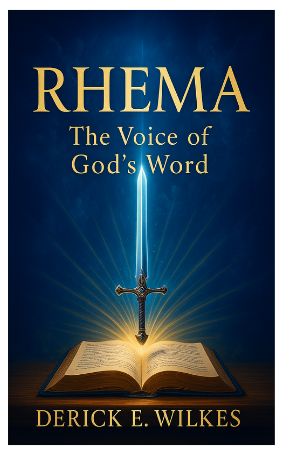
Rhema: The Voice of God’s Word
A faith-building resource to help you understand the living voice of God’s Word and how rhema gives faith its voice.
Add To Cart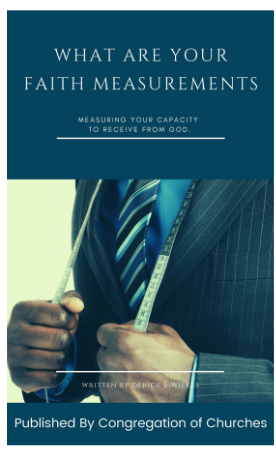
What Are Your Faith Measurements?
A teaching resource designed to help believers recognize, develop, and display the measure of faith God has given.
Add To CartCalendar of Events
Stay connected with worship, Bible study, ministry events, special dates, and partner gatherings.
Weekly Bible Study
Join us for Word-based teaching and spiritual development. Dial into our study @ 848-888-9933
Sunday Worship
Worship, teaching, prayer, and ministry through the Word. Watch us on ALIVESTREAM.TV or dial in @ 848-888-9933
Special Product Launch
PartnerTrac.com has launched! Helping organizations record, track and report giving with clarity. Discover more at PartnerTrac.com, or call 484-800-3434.

Video Message
This month’s featured video carries the same spirit as our written article, **Living Strong By The Word**. Discover how living by the Word of God, nourishes and strengthens you for life. The same Word which feeds you will bring strength to your inner man. There's a difference between having strength and being developed in the strength that you have. God's best is that you live life strong throughout the seasons.
Continue Watching on YouTube
Follow our playlist for more ministry teaching, encouragement, and Word-based video content.
As you watch, listen for the one statement Holy Spirit quickens to you — then note it in the sidebar.
Continue With These Ministry Resources
Before you close this issue, take a moment to respond, study, connect, and share these ministry resources with someone who needs them.
Faith To Be Born Again
Receive Jesus Christ and become part of God’s family through the finished work of Christ.
Receive Christ TodayAskCOC / RhemaSearch
Ask Bible questions and continue studying where revelation meets faith.
Ask A Bible QuestionCOC Direct
Find churches, ministries, and faith-based services. Get found, get connected, and get listed.
Visit The DirectoryYou are publishing the gospel through your giving.
As you sow into Congregation of Churches and PartnerMonthly, you help us develop digital training centers, leadership resources, and Gospel media that can travel where we cannot. Thank you for standing with us.
Online Giving
Set up a one-time seed or become a recurring monthly partner.
This secure link connects you to our online giving portal.
Mail a Gift
Prefer to give by mail? Include your name, email, and the word “Partner” in the memo.
3000 Chestnut Street, UNIT 42848
Philadelphia, PA 19101
Other Ways to Partner
Church and ministry collaboration, media sponsorship, or project-based giving.
Your generosity fuels PartnerMonthly and helps us reach more people with the Word.
Yes, I want to partner with this assignment.
Use the secure form below to let us know how you would like to connect. Once submitted, our team can follow up with next steps, links, and your PartnerMonthly access details.
Your information is kept confidential and used only for ministry communication and receipts.
More than a newsletter. It's a monthly encounter.
PartnerMonthly is the digital publication of Congregation of Churches, crafted especially for ministry partners, friends, and leaders hungry for revelation. Each issue blends teaching, prophetic insight, leadership development, and Kingdom economics with practical next steps so you can act on what you read.
We publish to build faith, align focus, and equip doers of the Word.
Why a magazine just for partners?
We believe partnership is spiritual. When you connect with this assignment, you should know what your faith is underwriting — and you should be fed by it. PartnerMonthly lets us speak directly to you about what Holy Spirit is saying to this ministry, this season, and to those who walk with us.
Together, we publish, preach, and plant the Word — and expect the fruit.